
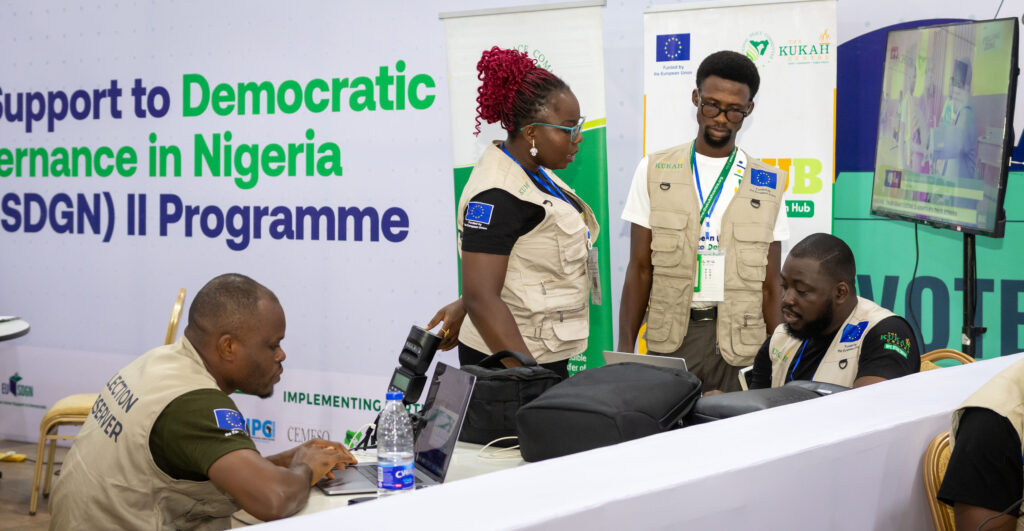
When the results of the 2026 Ekiti State Governorship Election were finally announced, and Governor Biodun Oyebanji was re-elected to office, many observers understandably focused on the outcome. For organisations like The Kukah Centre that served as election observers with the European Union Support to Democratic Governance in Nigeria (EU-SDGN) Election Observation Hub and spent several months supporting peaceful elections, however, the real story goes far beyond who won or lost.
Ekiti 2026 was particularly significant because it was among the first major elections conducted under the provisions of the Electoral Act 2026. Particularly regarding the expectations of results transmission under Section 60 and the provisions on electoral offences in Sections 118-133 of the Act. It therefore served not only as a governorship election but also as a practical test of new electoral procedures, institutional preparedness, and stakeholder behaviour.
The good news is that Ekiti largely avoided the widespread violence that has characterised some elections in Nigeria’s past.

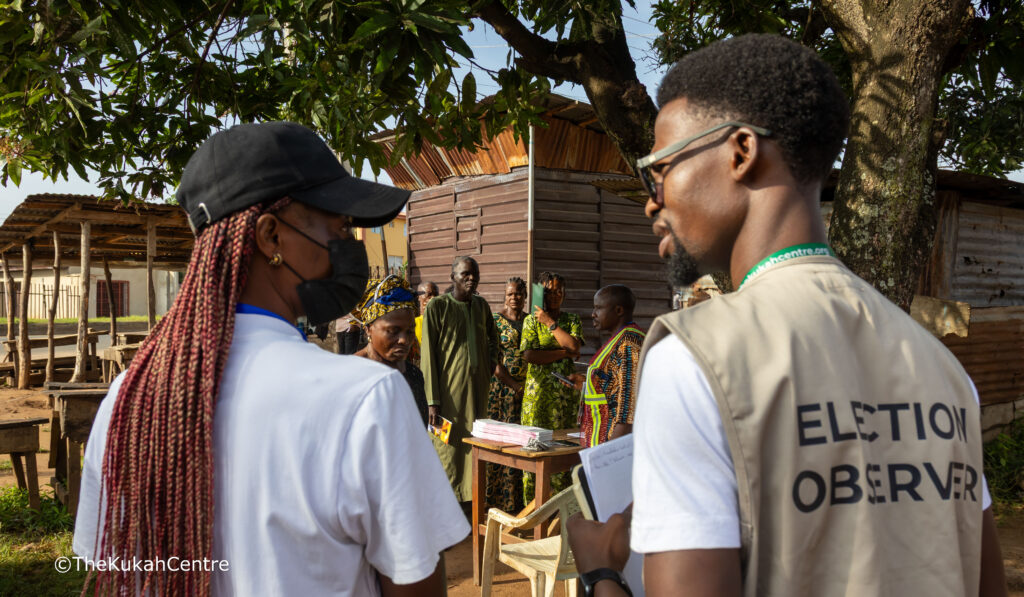
Months before Election Day, The Kukah Centre’s Political and Security Context Analysis, an evidence-based assessment of the political, security, and socio-economic factors likely to shape the electoral environment ahead of the election, had indicated that the greatest threats to the poll were unlikely to come from organised political violence. Instead, the report identified structural insecurity, electoral offences, political thuggery, voter intimidation, misinformation, and vote-buying as the principal risks.
Election Day observations largely confirmed that assessment.
The electoral process was generally peaceful. Election officials arrived early in most locations, voting commenced on schedule in many polling units, and the Bimodal Voter Accreditation System (BVAS) technology performed effectively in most observed locations. The election also recorded commendable levels of inclusion for women and persons with disabilities. Security agencies maintained visible deployments across the state, helping to deter violence and reassure voters.
These achievements deserve recognition.
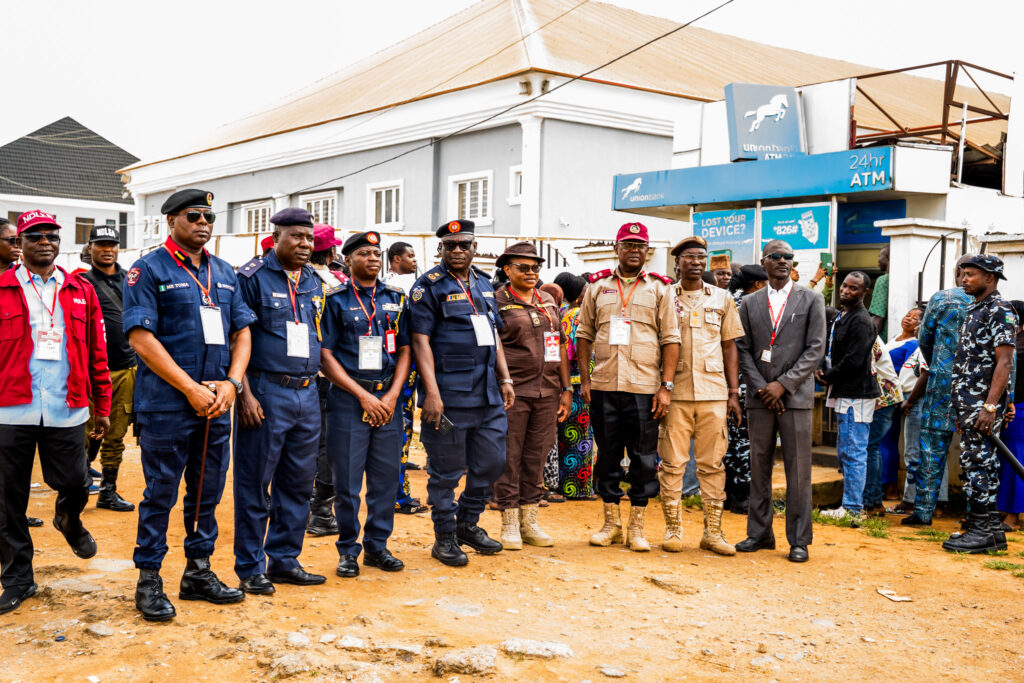
The coordination among security agencies was particularly impressive. Across many polling units, security personnel were professional, calm, and proactive. Their presence contributed significantly to maintaining order throughout the process.
Yet, celebrating these gains should not prevent us from confronting uncomfortable truths. The most troubling observation from Ekiti 2026 was the persistence, and in some locations, normalisation, of vote-buying.
Observers deployed by The Kukah Centre and other partners under the EU-SDGN documented incidents of voter inducement and vote-buying across multiple polling units. It was visible across several polling units that these practices were often organised, systematic, and visible enough to be detected by observers and community members alike.
This raises an important question: How can a practice so widespread remain so difficult to stop? The persistence of vote-buying during the Ekiti election reminds us that electoral malpractice is sustained by more than one actor. It begins with a political culture in which some candidates and political parties continue to see financial inducement as a viable campaign strategy; and where too many voters, driven by economic hardship or disillusionment, are willing to exchange their votes for immediate gain. This transactional approach to democracy erodes the sanctity of the ballot and weakens public confidence in electoral outcomes. While security agencies deserve commendation for maintaining peace and preventing large-scale violence, they must also confront the uncomfortable reality that vote-buying often occurred in plain sight with little or no intervention. Future elections will require more than visible security deployments; they demand an uncompromising commitment to enforcing electoral laws and treating vote-buying and other electoral offences with the same urgency and seriousness as physical violence. After all, democracy can be undermined without a single gunshot being fired.

Another concern that became increasingly apparent throughout the process was the gross apathy of young people. Across stakeholder engagements, community meetings, and even on Election Day itself, one could not help but notice the gap between the demographic reality of Nigeria and the level of youth participation in electoral processes. Young people dominate conversations on social media and are often at the centre of political discourse, yet many appear increasingly disconnected from formal democratic participation.
Some cite disappointment. Others point to economic hardship, distrust in institutions, or the feeling that elections do not significantly affect their lives. Whatever the reason, the consequences are serious. A democracy where young people become spectators rather than participants risks losing both legitimacy and innovation. If elections are to remain meaningful, civic engagement must extend beyond online commentary. Young people must be encouraged to see themselves not merely as observers of politics but as stakeholders in governance.
This is where civic education must evolve. Reversing youth apathy will require more than public service announcements urging them to vote. It demands a shift from information campaigns to genuine engagement. Young people should be involved in designing civic education programmes, leading community conversations, serving as election observers and peace ambassadors, and using technology to drive issue-based participation. Actors should create space where their voices influence decisions, and not just election outcomes; this way, we can rebuild trust in democratic institutions. When young people believe they have stake, participation becomes a natural consequence rather than an obligation.
One of the most rewarding aspects of the Ekiti experience was witnessing the impact of preventive engagement.
The Peace Accord process demonstrated once again that dialogue remains one of the most effective tools for conflict prevention. Through engagements with political parties, candidates, security agencies, traditional rulers, religious leaders, media practitioners, and civil society actors, tensions were addressed before they escalated.
The lesson here is simple: peacebuilding works best before a crisis begins. Far too often, attention focuses on responding to electoral violence after it occurs. The National Peace Committee’s (NPC) model emphasises prevention through dialogue, trust-building, accountability, and early warning mechanisms. The success of Ekiti reinforces the value of that approach.
As attention shifts to the Osun Governorship Election and ultimately the 2027 General Elections, several lessons deserve consideration. First, election security must move beyond physical deployments. Greater attention should be given to preventing vote-buying, voter intimidation, and other non-violent forms of electoral manipulation. Secondly, political parties must take greater responsibility for the conduct of their supporters. Peace Accords should not be viewed as ceremonial events but as binding public commitments.
Thirdly, early warning systems should be strengthened and expanded. The Kukah Centre’s Election Security Information (ESI) Hub, a technology-enabled platform that collects, analyses, and disseminates real-time data on electoral risks, security incidents, and stakeholder compliance, demonstrated the value of evidence-based monitoring and timely information for preventive action. Continued investment in such systems can help identify emerging threats, inform rapid response, and prevent isolated incidents from escalating into broader crises. Furthermore, youth engagement must become a national priority. Democracy cannot be sustained if younger generations continue to lose faith in electoral participation.
Finally, electoral stakeholders must recognise that peaceful elections and credible elections are not necessarily the same thing. An election can be peaceful and still be undermined by malpractice. Our goal should be both peace and integrity.
Ekiti has shown that progress is possible. It has also reminded us that democracy remains a work in progress. As we prepare for Osun and look ahead to 2027, the challenge before all of us- electoral institutions, security agencies, political actors, civil society organisations, the media, and citizens- is not simply to avoid violence. It is to build elections that are peaceful, credible, inclusive, and worthy of the trust of the Nigerian people.
That is the true test of democratic success.
Victor Agi
Media and Communications Officer, The Kukah Centre